Across the Pond and Back Again
A Personal Experience – Sister City Exchange Program Cincinnati
Welcome signs, waffles and the best kind of jet lag
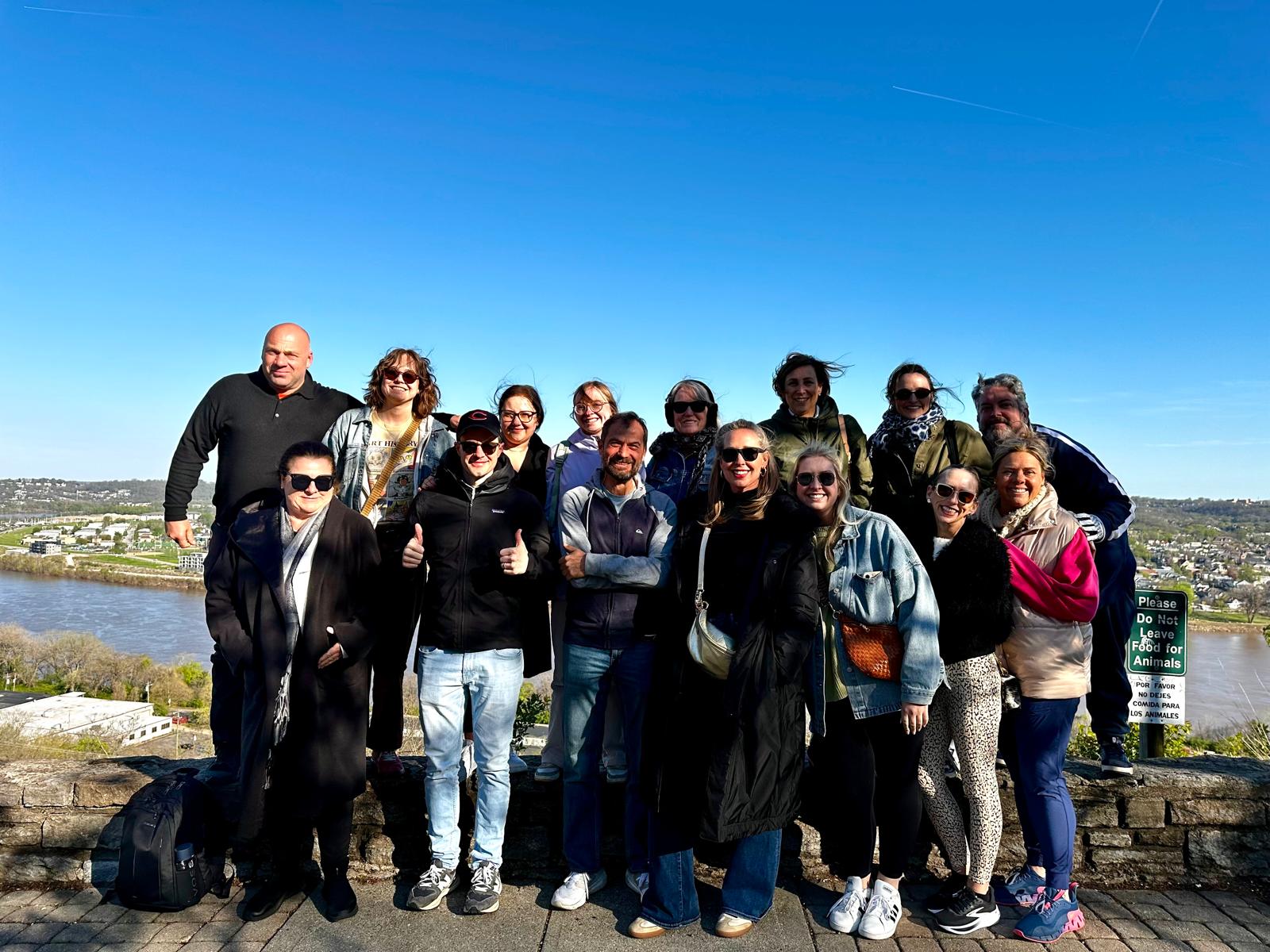
If you ever thought a school exchange report would begin with airport confusion, glass windows, welcome signs and a WhatsApp message saying, “We’re still in plane. No hurries ;)”, you are right. Our arrival in the US did not feel formal at all. It felt warm. Very warm. There were signs, hugs, instant orientation and the comforting feeling that people had truly been waiting for us. After that came Belgian waffles, downtown impressions, lots of laughter, and the gradual discovery that jet lag can, in fact, be softened by friendliness and carbohydrates.
By the time someone later posted “Touchdown Munich!” and another message added the very German summary “Cold but dry,” we were safely back home again. But we had not returned empty-handed. We came back with stories, ideas, new vocabulary and a deeper sense of what schools can be when they are opened up generously to guests.
Our programme moved between very different educational worlds: the personalized learning culture of Sycamore High School, the college-and-career orientation of Deer Park Jr./Sr. High School, the arts-driven identity of School for Creative and Performing Arts, and the large-scale pathway model of West Clermont High School. Beyond schools, we also encountered the broad vocational range of Diamond Oaks Career Campus, the community-based adult support model of Metzcor Community Campus, the powerful exhibitions of the National Underground Railroad Freedom Center, and the German-American history of Over-the-Rhine, whose nineteenth-century roots lie in immigrant settlement north of the old canal nicknamed “the Rhine.” 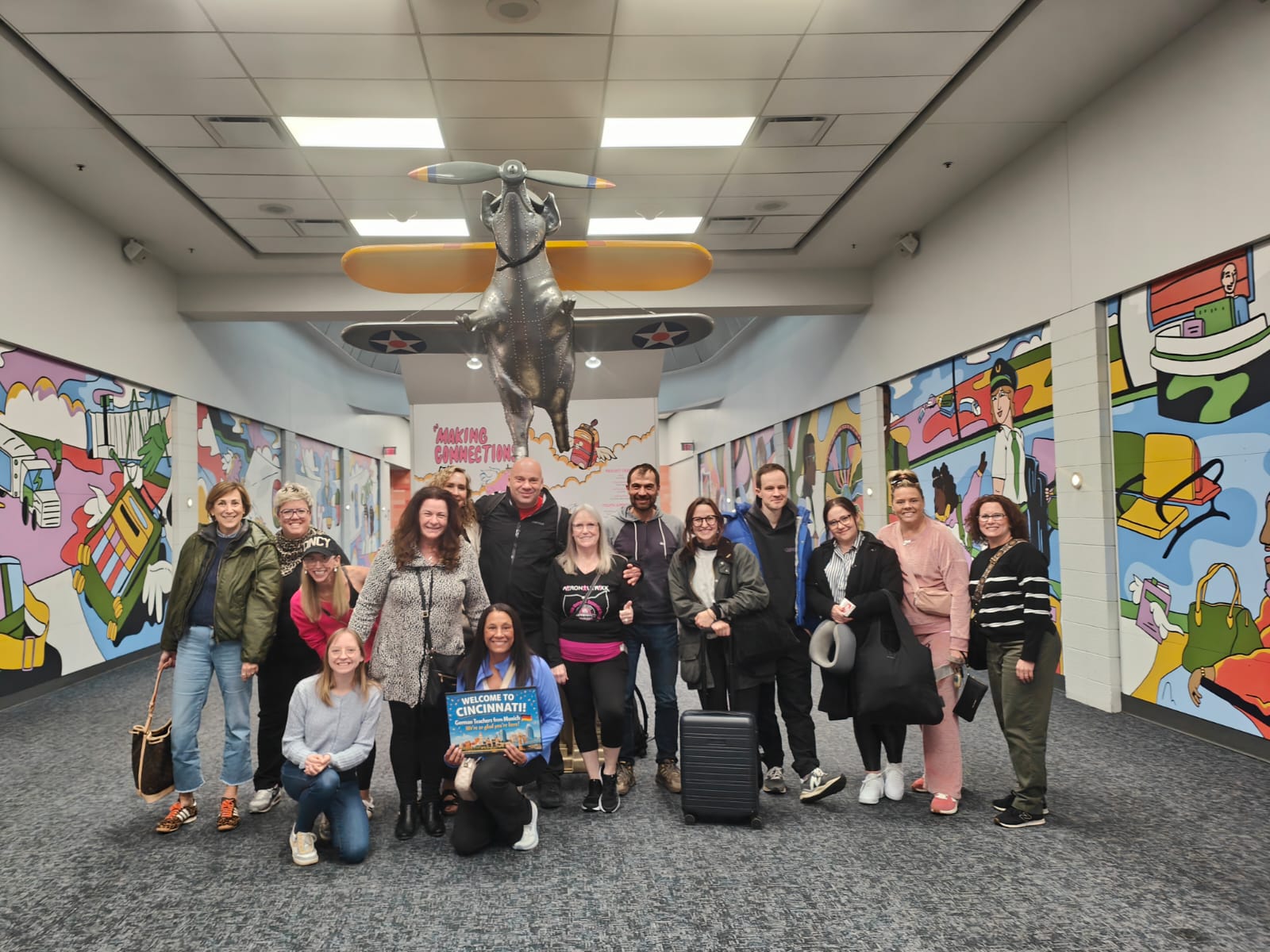
Schools that did not look alike and did not try to
One of the most striking impressions was that there is no single “American school model.” At Sycamore, the Synnovation Lab describes itself through the pillars of community, personalization and meaningful learning opportunities, and it asks students to master concepts before moving forward. West Clermont, by contrast, presents its own high-school identity through the three pathways “Employ, Enlist and Enroll,” while its “WC Your Future” programme explicitly connects learning with future work and invites community partners into that process. Deer Park, meanwhile, frames college and career readiness not only as academic planning but also as social-emotional support, and it explicitly emphasizes that learning thrives in a safe, welcoming and equitable environment built on positive relationships.
The arts school offered yet another answer to the question of what school can be. SCPA is a K–12 public school with around 1,400 students and seven artistic departments, from creative writing and dance to technical theatre and visual arts. Diamond Oaks showed a different but equally impressive form of specialization, with programmes ranging from aviation maintenance and veterinary assisting to culinary arts, IT and welding. And Metzcor reminded us that education and development do not stop at school age: its community campus describes itself as a place “where opportunities are created and friendships are built” for adults with intellectual and developmental disabilities.
What made these visits memorable, however, was not just the variety of programmes. It was the human atmosphere. We saw breakfast before tours, students who were proud to show their classrooms, and adults who knew how to explain their school not as a set of statistics but as a place where children and young people spend a huge part of their lives. That may sound simple, but it matters.
What felt different from Bavaria
The clearest structural difference between the systems lies in how they are organised and funded. In Ohio, public school districts are financed through a combination of federal, state and local funds; according to both the state and the Ohio School Boards Association, local property taxes are a major part of that mix, and school districts also may receive voter-approved income-tax revenue.
In Bavaria, the system feels much more state-steered and pathway-based. All children first attend primary school, and after grade 4 they move into different secondary routes such as Mittelschule, Realschule or Gymnasium. For public primary schools, enrolment is generally tied to the local catchment area, and for Bavarian schools the State Office of Schools finances the schools and support programmes among its core responsibilities, while the Free State also subsidises municipal construction measures for public school buildings and sports facilities.
Another big difference is visibility. Ohio’s traditional report cards give districts and schools an overall rating from 1 to 5 stars in half-star increments, built from six components: Achievement, Progress, Gap Closing, Early Literacy, Graduation, and College, Career, Workforce, and Military Readiness. That makes performance easy to read from the outside. 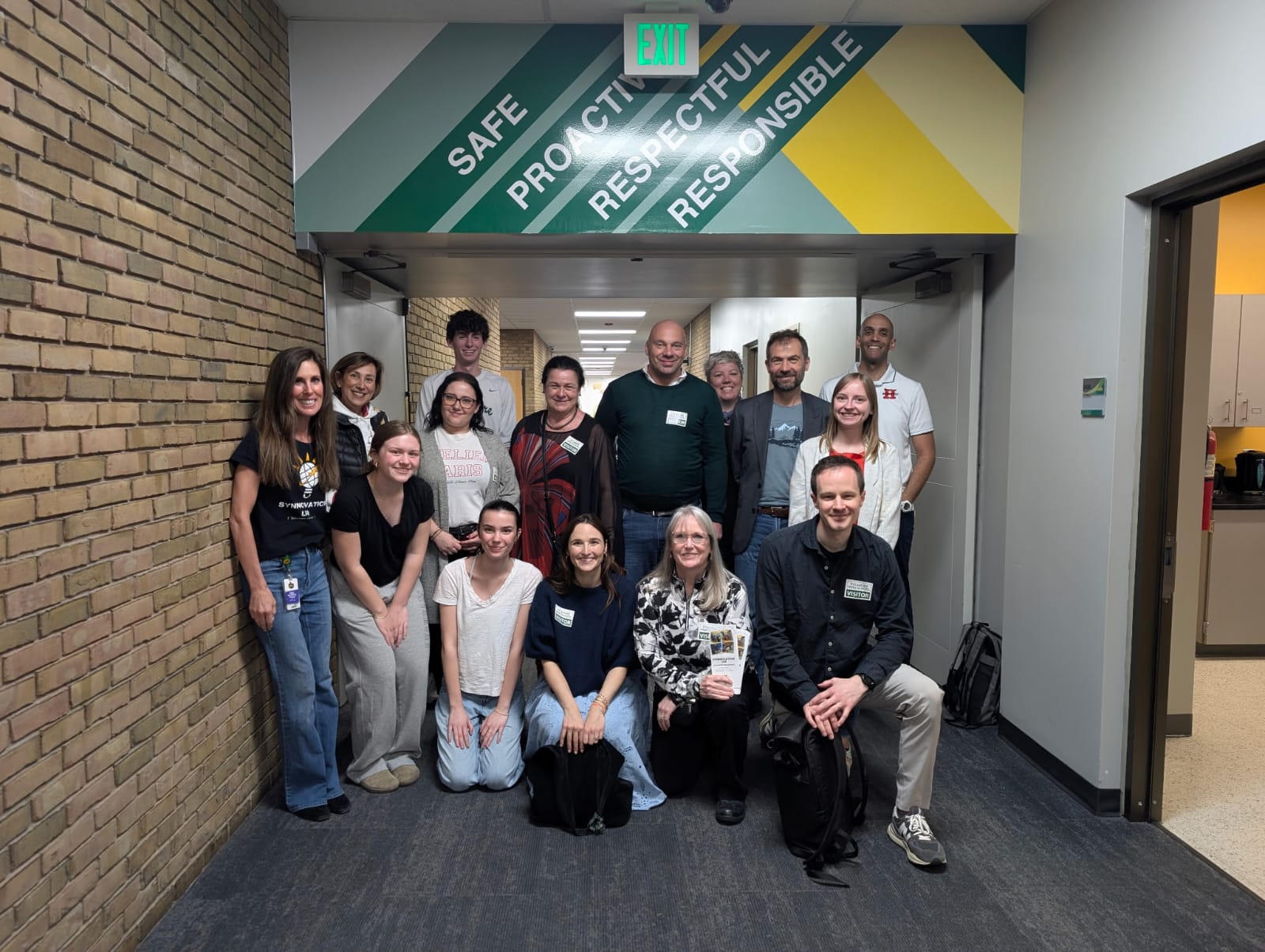
At the same time, our group did not come away “fascinated” by the star system. Interested, yes. Impressed by the transparency, certainly. But also cautious. When local funding depends in part on property wealth and locally approved taxes, it is hard not to ask how fairly star ratings can ever capture the realities of very different communities. That is our reflection, not an official verdict. What stayed with us most was not the number of stars over a school entrance, but whether a school felt like a safe and dignified place to learn.
Motivation, belonging and language support
This is where PBIS became interesting for us, though not in a simple “wow, we need this immediately” way. PBIS is an evidence-based, tiered framework that supports behavioural, academic, social, emotional and mental-health development, and we were told that its consistent implementation helps create predictable and supportive learning environments where students are more likely to stay engaged. In practice, what we saw was not a magic button. It was a language of routines, expectations, encouragement and structure. Sometimes it looked formal. Sometimes it looked very ordinary. But it often pointed toward the same goal: making school more readable, calmer and more humane for students.
In fact, one of the strongest lessons from the trip was that motivation is about far more than grades. At two elementary schools we visited, facility dogs are officially part of the support culture: Kelsee at North Elementary and Gamma at Central Elementary are presented by the schools as specially trained dogs that can support self-esteem, responsibility, movement and stress reduction. Add to that gestures like student recognition, personal greetings and the visible pride staff took in their communities, and you start to understand something important: a school can motivate because it feels successful, but it can also motivate because it feels safe, familiar and kind.
Language support was another area where the comparison with Bavaria became especially useful. In In Ohio a standardized process is used, in which the Language Usage Survey comes first and the Ohio English Language Proficiency Screener is the second step in identifying English learners; students also continue to be monitored after reclassification. Bavaria has its own support structures, but they look different: we have DeutschPLUS courses, Deutschklassen and the 240-hour Vorkurs Deutsch before school entry, while the transition after grade 4 is formally shaped by the Übertrittszeugnis. In short, both systems try to support linguistic development, but Ohio’s model felt more explicitly framed through English-learner identification and monitoring, while Bavaria’s support is more tightly woven into transition and placement structures.
What we are bringing back with us
So what do we bring back to our classrooms? Not a simple list of “America does this, Bavaria does that.” The exchange gave us something better: sharper questions. How much room do students need for ownership of their learning? How visible should school performance be to the public? How can we value vocational pathways more strongly? What does it take for a school to become a true second home? And how can language support, student choice and positive school climate be strengthened without turning everything into a system of rewards and labels? The schools we visited answered these questions in different ways, and that diversity was precisely the point.
Of course, not everything was serious, and thankfully so. We also learned that teachers can become highly competitive over horse-racing “strategies,” that Skyline Chili really does divide humanity into believers and sceptics, that a lost pair of glasses can become a group mission, and that an outlet visit can evolve into a full-scale operation involving geometry, denial and far too many shopping bags. We returned with new educational insights, yes, but also with new words like ‘fascinators’ and ‘peanut gallery’, and with the comforting knowledge that professional learning can include waffles, laughter and the occasional fashion emergency.
Most of all, we came back with gratitude. Our American hosts did not simply organise a programme. They opened schools, homes, conversations and communities to us. They treated us with extraordinary warmth and generosity, and that spirit shaped every school visit more strongly than any report card ever could. We arrived as guests. We left feeling like friends. (written by a participant of the exchange program 2026)